
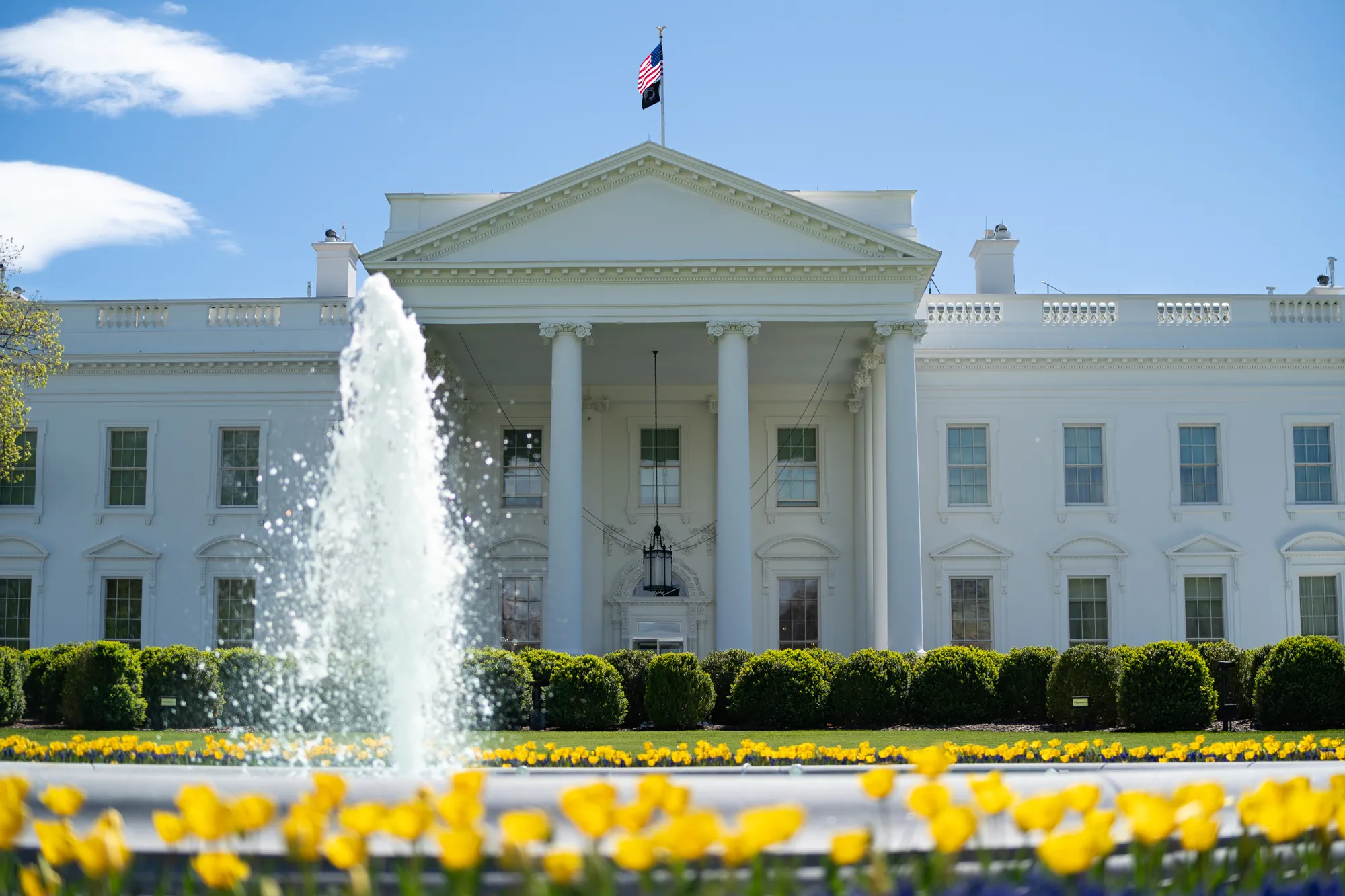
White House East Wing demolition, construction begins on the new ballroom project
Construction on a new ballroom at the White House began on October 20, 2025, as crews started work on the East Wing facade. The project, proposed by President Donald Trump, adds a large event space to the executive residence. Images from the site show equipment removing parts of the exterior, marking the first major structural change since the 1940s. The White House confirmed that the work is underway, and the ballroom is expected to open in 2027.
This development follows Trump’s July 2025 announcement of the initiative, which is funded by both private donations and federal resources. The East Wing, home to offices and visitor areas, will be reconfigured to accommodate the addition.
Project overview, a long-planned expansion for larger events
The ballroom project will create a 12,000-square-foot space for large events, addressing the East Room’s limited 80-seat capacity. Trump called it the fulfillment of a “150-year dream” during a January 2025 meeting with the White House Historical Association. The plan received final approval in September 2025, categorized as site preparation on federal property, which exempts it from certain historic reviews.
Architect Peter Marino designed the new space with marble floors, vaulted ceilings, and views of the South Lawn. The ballroom will seat 650 and host up to 1,000 standing guests. The total funding of $250 million includes $150 million from private donors and $100 million from the General Services Administration (GSA) for modernization such as seismic retrofitting.
During an October 20 event hosting the LSU baseball team, Trump referred to the construction as “progress,” signaling the official start of the project.
Demolition details, a visible start to the work
Work began with crews using heavy equipment to remove the East Wing facade facing the Treasury Department. Photos from The Washington Post and the Associated Press show shattered windows, rubble, and machinery dismantling limestone walls under Secret Service supervision. The demolition will last four months, followed by two years of construction. A GSA spokesperson confirmed it is “structural preparation for the ballroom foundation.”
Trump posted on Truth Social, “Ground broken on the new White House Ballroom. The East Wing is being modernized and will be more beautiful than ever.” Witnesses from Lafayette Square described the site as active but secure, with no disruptions to daily White House operations.
Timeline and funding, from proposal to 2027 completion
The idea dates back to Trump’s first term, when he highlighted the East Room’s capacity issues. The project gained approval in 2025 after reviews by the Historical Association. Demolition runs from October 2025 to February 2026, followed by construction from March 2026 to July 2027.
The ballroom replaces part of the 1942 East Wing, while offices are temporarily relocated. Because it is on federal grounds, the project is not subject to full historic preservation procedures.
Context and broader developments
The White House, built between 1792 and 1800, last underwent major renovation during Harry Truman’s presidency in 1948–1952. The East Wing, first added in 1902 and expanded in 1942, has seen periodic updates since. This is the largest change in over seventy years.
The work begins amid a government shutdown related to tariff disputes, though White House operations continue. Communications Director Steven Cheung shared archival images from the Truman reconstruction, comparing the scope of the two projects.
Once completed, the ballroom will serve as the main venue for state dinners and large events, relieving pressure on the smaller East Room. Trump said in July 2025 that the addition “will not interfere with the current building’s historic core.”
The takeaway
The White House East Wing demolition marks the start of a $250 million ballroom expansion set for completion in 2027. The project, funded through both private and public channels, represents the first structural transformation of the presidential residence since the 1940s.
For more details, visit whitehouse.gov or consult reports from The Washington Post, the Associated Press, and Reuters.