
Honor's Robot Phone: Blending AI Smarts with Robotic Charm to Redefine Mobile Companions
By the FTN Team | October 23, 2025
In the ever-evolving world of smartphones, where sleek designs and blistering processors often steal the spotlight, Honor is charting a daring new course with its Robot Phone. Teased during the recent Magic8 series launch in Beijing, this concept device fuses artificial intelligence, robotic mechanics, and cutting-edge imaging into what the company calls an "emotional companion." It's not just about snapping sharper photos or faster apps; it's a vision of a phone that senses your world, adapts to your whims, and even shares in quiet moments of wonder. As we stand on the brink of its full reveal at Mobile World Congress 2026 in Barcelona, this innovation stirs a deep enthusiasm for tech that feels alive, turning everyday tools into intuitive allies.
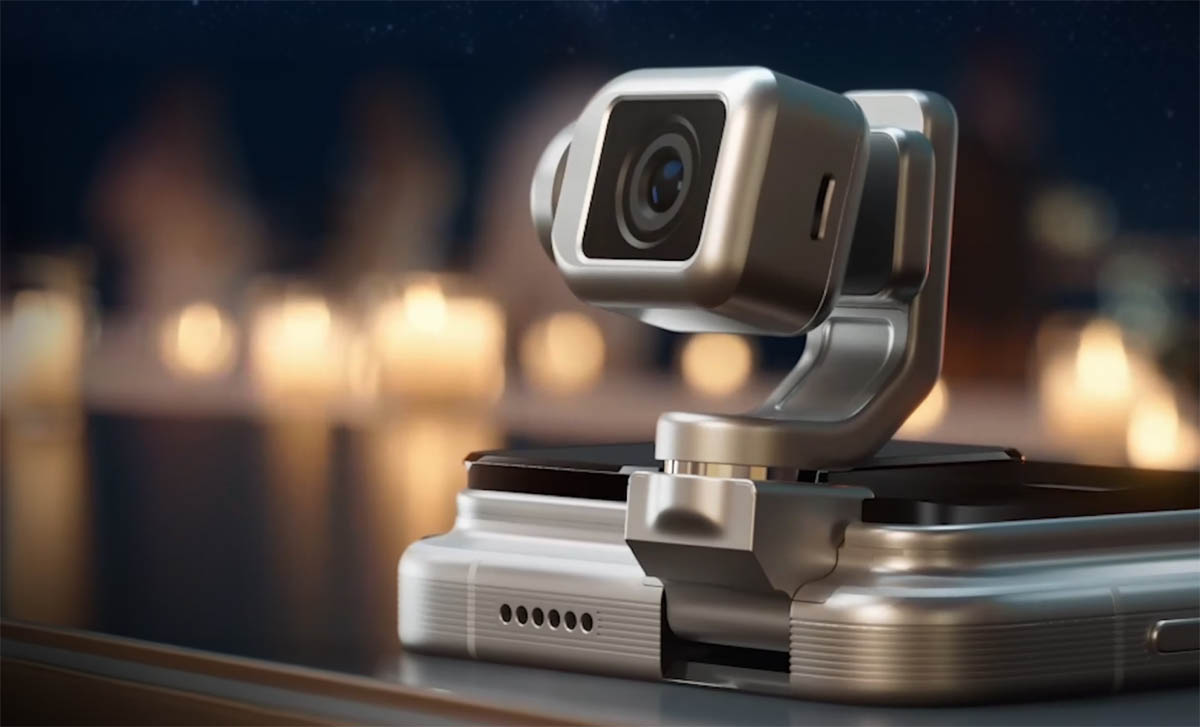
The Robot Phone emerges as a cornerstone of Honor's ambitious Alpha Plan, a five-year strategy backed by a staggering $10 billion investment to propel the brand into the forefront of AI-driven ecosystems. This isn't a fleeting gimmick but a deliberate evolution, progressing from traditional smartphones to AI-enhanced models and now to robotic hybrids that bridge human intuition with machine precision. At its heart lies a pop-out gimbal-mounted camera arm that extends from the rear, allowing 360-degree rotation for shots from impossible angles, whether you're capturing a family hike overhead or a low-light scene while lounging on the couch. The teaser video, rendered in vivid CGI, shows the arm unfolding smoothly, tracking subjects with eerie accuracy, and even tilting in apparent delight at a starry sky, all powered by multi-modal AI that processes visual, auditory, and environmental data in real time.
What truly captivates is the "emotional intelligence" woven into its core. Honor envisions this device as more than hardware; it's a partner that anticipates needs, like suggesting the perfect composition for a sunset portrait or gently swaying to entertain a restless child through subtle vibrations and sounds. Drawing inspiration from compact gimbals like the DJI Osmo Pocket, the robotic arm integrates seamlessly into a slightly thicker chassis, marked by an alpha symbol that nods to the Alpha Plan's pioneering spirit. While full specifications remain shrouded until MWC, leaks and teases point to synergies with the Magic8's powerhouse features: a Snapdragon 8 Elite chipset for seamless on-device AI, a robust silicon-carbon battery to fuel those mechanical feats without constant recharges, and advanced sensors for object recognition and emotional cue detection. Privacy remains a priority, with processing handled locally to safeguard user data, echoing Honor's commitment to ethical AI amid growing global scrutiny.
Mechanical Marvels: How the Gimbal Arm Transforms Everyday Capture
Delve into the mechanics, and the Robot Phone's ingenuity shines brighter. The camera module, split into a dual-section rear bump, houses the arm in a compact fold when idle, preserving the phone's portability. Upon activation, it deploys with a whisper-quiet motor, offering not just stability for buttery-smooth videos but autonomous framing that rivals professional rigs. Imagine vlogging a skydiving jump: the arm pivots independently, keeping you centered without a single shaky frame, or flipping for selfies that capture genuine expressions by reading facial cues.
This builds on Honor's existing AI toolkit, like the YOYO Agent in the Magic8 series, which already scans e-commerce sites for deals or hails rides with a voice command. Here, it evolves into something tactile and responsive, potentially integrating AR overlays for real-time edits or health monitoring via subtle gestures. For creators and casual users alike, it's a liberation from tripods and awkward arm extensions, making content creation feel effortless and joyful. Durability questions linger, of course, with IP ratings and drop tests essential for real-world robustness, but Honor's track record with foldables suggests they'll engineer it to withstand daily rigors.
To illustrate the leap forward, consider this comparison of key elements against current flagships:
| Aspect | Traditional Smartphones (e.g., iPhone 16, Galaxy S25) | Honor Robot Phone (Teased Concept) | |---------------------|-------------------------------------------------------|-----------------------------------| | Camera Mobility | Fixed lenses, limited to tilt-shift software | 360° gimbal arm for dynamic angles | | AI Integration | Voice/text processing, basic scene detection | Multi-modal sensing for emotional adaptation | | Form Factor | Slim, uniform profile | Thicker rear for robotic housing, alpha branding | | Battery Demands | Standard 4,000-5,000mAh | Enhanced silicon-carbon for motor/AI endurance | | Interaction Style | Screen/touch-centric | Autonomous, gesture-responsive companion |
This table highlights how the Robot Phone shifts from passive tools to active participants, a subtle yet profound change that could inspire rivals to rethink hardware boundaries.
Global Perspectives: Enthusiasm Meets Measured Skepticism
Across the tech landscape, reactions to the Robot Phone blend widespread intrigue with thoughtful reservations, reflecting a world eager for breakthroughs yet cautious of unproven leaps. Many hail it as a refreshing jolt of creativity in a market saturated with iterative upgrades, praising its potential to democratize pro-level videography and infuse AI with warmth that feels less clinical and more connective. Enthusiasts in Asia and Europe, where robotics permeate daily life from factory floors to home assistants, see it as a natural progression, evoking the portability revolutions of past icons like Sony's Walkman, now amplified for the AI era. They appreciate how it could empower travelers with hands-free translations or parents with interactive storytelling, turning solitude into shared delight.
Yet, a vocal minority tempers the hype, questioning whether the robotic flair risks overshadowing core reliability, like battery life strained by constant micro-movements or software hiccups in nuanced emotional reads. In the U.S., where privacy debates rage, some express unease over AI's gaze-like presence, wondering if it blurs lines between helpful and intrusive. Others dismiss it as conceptual vaporware, a flashy demo unlikely to survive mass production's cost and complexity. These critiques, while pointed, fuel constructive dialogue, underscoring the need for transparent testing and user-centric refinements as Honor gathers feedback through its "Users Wish Plan." Overall, the discourse pulses with optimism, a collective nod that true innovation thrives on bold risks, even if they invite scrutiny.
Navigating Hurdles: From Concept to Consumer Reality
No frontier-pushing device arrives without obstacles, and the Robot Phone is no exception. The teaser’s reliance on CGI sparks debates about feasibility: Can a phone-sized form truly house a durable, dust-resistant arm without ballooning thickness or vulnerability? Battery efficiency poses another puzzle, as robotic actuators demand power that could outpace even advanced cells, potentially requiring smarter adaptive modes to conserve juice during idle hours. Pricing looms large too, with Magic8 models starting around $600; a robotic upgrade might push it toward premium territory, alienating budget-conscious buyers unless Honor scales production wisely.
Regulatory landscapes add layers, particularly in regions like the EU mandating stringent AI transparency and safety standards for consumer robotics. Honor's global rollout strategy, honed through post-Huawei independence, will be tested here, balancing innovation with compliance. Still, the company's invitation for early user input via the Wish Plan signals a collaborative ethos, allowing refinements based on diverse voices before Barcelona's spotlight. If navigated adeptly, these challenges could transform skeptics into advocates, proving that mechanical ambition pays dividends in user loyalty.
Final Thoughts
The Honor Robot Phone isn't merely a gadget; it's a manifesto for mobiles that mirror our curiosity and companionship needs, igniting a passion for tech that delights as much as it delivers. In a sea of sameness, its robotic soul promises to recapture the thrill of discovery, making mundane moments memorable through clever mechanics and heartfelt AI. As we await MWC 2026, one thing rings clear: Honor is reminding us why we fell in love with smartphones in the first place, evolving them into extensions of ourselves rather than mere conveniences. Dive into the teaser on Honor Global and ponder your own wishes for this robotic frontier. The future isn't just coming; it's reaching out to join us.